Introduction to Reproduction
Reproduction is the biological process by which living organisms produce new individuals of the same species. It is essential for the continuation of life on Earth. Without reproduction, species would become extinct over time.
Reproduction not only ensures survival but also helps in transferring genetic information from parents to offspring. This genetic continuity maintains the characteristics of a species.
- Essential for survival
- Maintains population
- Transfers genetic information
Importance of Reproduction
- Prevents extinction of species
- Maintains ecological balance
- Ensures continuity of life
Types of Reproduction
- Asexual Reproduction
- Sexual Reproduction
Asexual Reproduction
Asexual reproduction is a mode of reproduction in which a single parent produces offspring without the involvement of gametes. The offspring produced are genetically identical to the parent and are called clones.
Characteristics of Asexual Reproduction
- Only one parent required
- No gamete formation
- No fertilization
- Offspring are identical
- Fast process
Binary Fission
Binary fission is a type of asexual reproduction in which a single organism divides into two equal halves. Each half grows into a new individual.
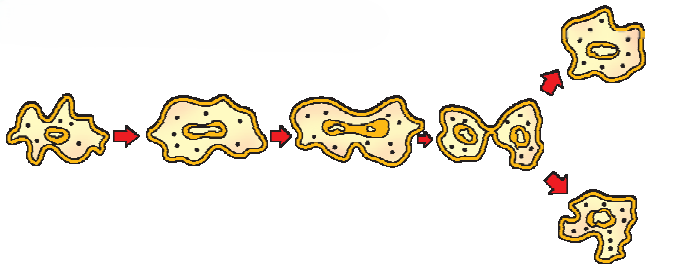
Binary Fission in Amoeba
- Common in Amoeba, bacteria
- Simple and rapid process
Multiple Fission
In multiple fission, a single organism divides into many daughter cells at once. This usually happens under unfavorable conditions.
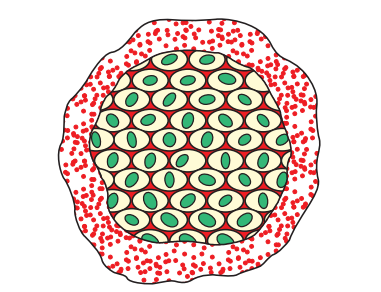
Multiple Fission
- Occurs in Plasmodium
- Produces many offspring
Budding
Budding is a type of asexual reproduction in which a small outgrowth (bud) develops on the parent body. This bud grows and eventually detaches to form a new individual.
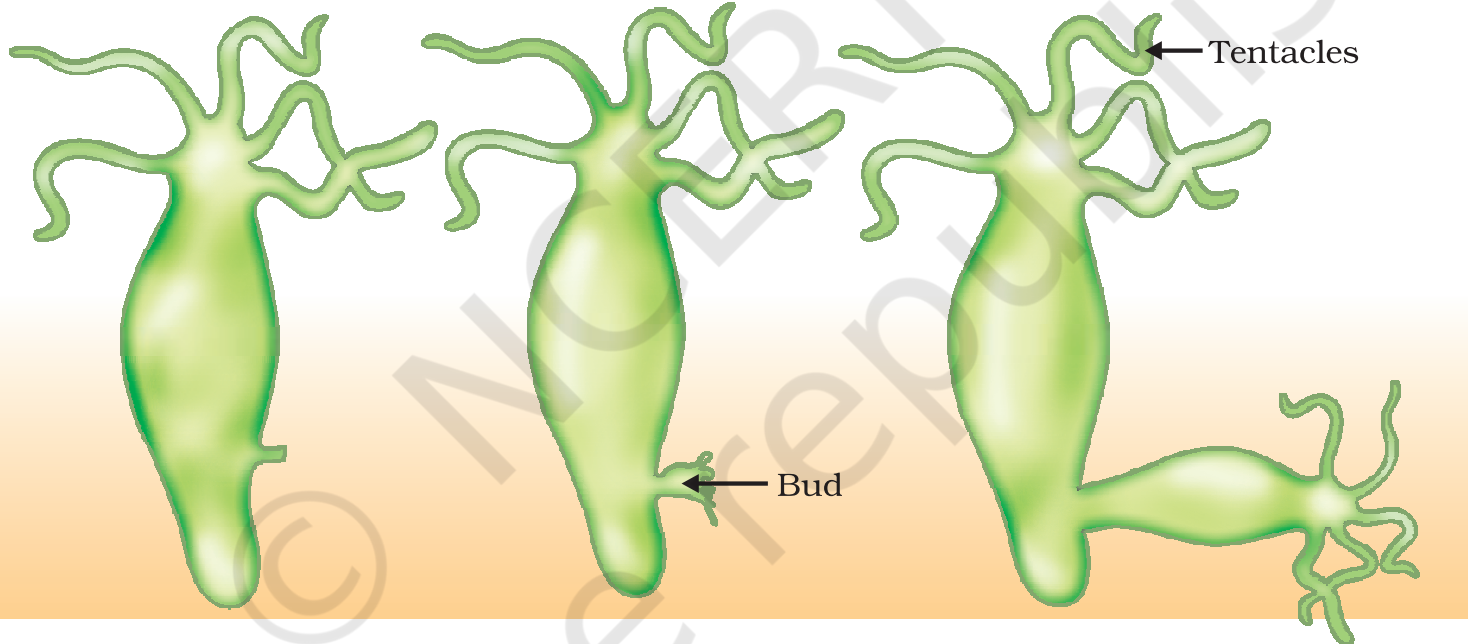
Budding in Hydra
- Occurs in yeast and hydra
- New organism develops from bud
Fragmentation
Fragmentation is a process in which the body of an organism breaks into pieces, and each piece grows into a new individual.

Fragmentation in Spirogyra
- Occurs in simple organisms
- Each fragment becomes new organism
Regeneration
Regeneration is the ability of an organism to regrow lost body parts. Some organisms can form a complete new individual from body parts.
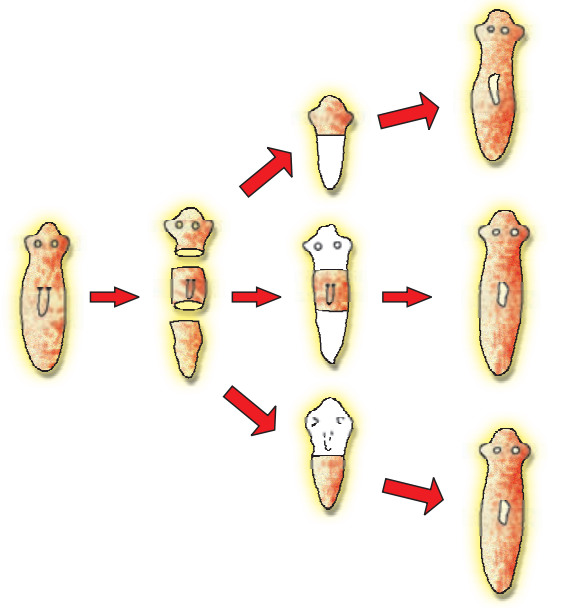
Regeneration in Planaria
- Occurs in planaria, hydra
- High regeneration ability
Spore Formation
Spore formation is a type of asexual reproduction in which organisms produce spores. These spores can survive unfavorable conditions and grow into new individuals when conditions become favorable.
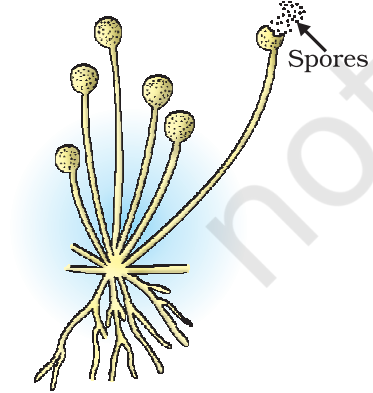
Spore Formation in Rhizopus
- Occurs in fungi
- Spores are resistant
Vegetative Propagation
Vegetative propagation is a method of asexual reproduction in plants where new plants grow from vegetative parts like roots, stems, and leaves.
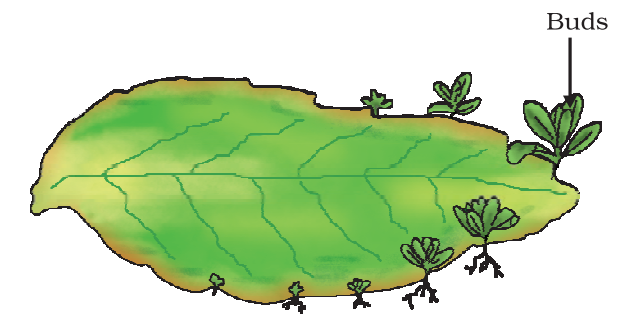
Vegetative Propagation
- Occurs in potato, sugarcane
- Fast method of reproduction
Sexual Reproduction
Sexual reproduction is a mode of reproduction in which two parents are involved. It includes the formation and fusion of male and female gametes. This process leads to genetic variation in offspring, which is important for evolution and survival.
- Two parents involved
- Gamete formation occurs
- Fertilization takes place
- Offspring are not identical
Importance of Sexual Reproduction
- Creates genetic variation
- Helps in adaptation
- Essential for evolution
Human Reproductive System
In humans, reproduction involves two systems: male reproductive system and female reproductive system. Both systems work together for reproduction.
---Male Reproductive System
The male reproductive system is responsible for the production and transport of male gametes (sperms).
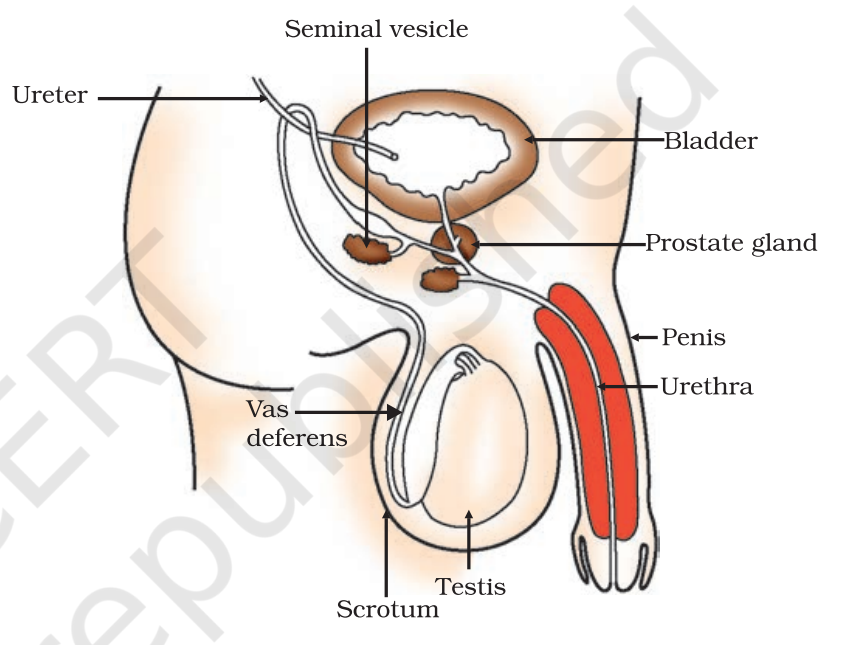
Male Reproductive System
Main Parts
- Testes: Produce sperm and testosterone
- Scrotum: Maintains temperature
- Vas deferens: Transports sperm
- Urethra: Passage for sperm
Female Reproductive System
The female reproductive system produces female gametes (eggs) and supports development of embryo.
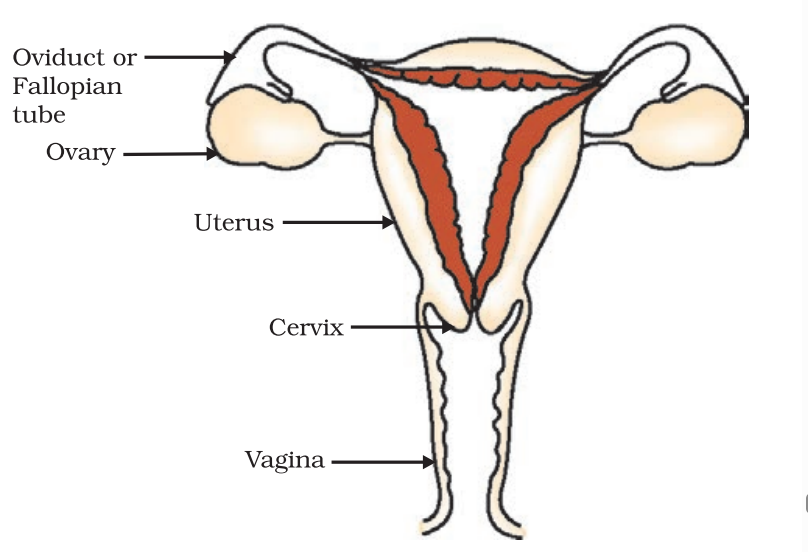
Female Reproductive System
Main Parts
- Ovary: Produces eggs
- Fallopian tube: Site of fertilization
- Uterus: Development of embryo
Gamete Formation
Gametes are reproductive cells. In males, sperm is produced, and in females, egg (ovum) is produced.
- Sperm → male gamete
- Ovum → female gamete
Fertilization
Fertilization is the process in which male gamete (sperm) fuses with female gamete (egg) to form a zygote.
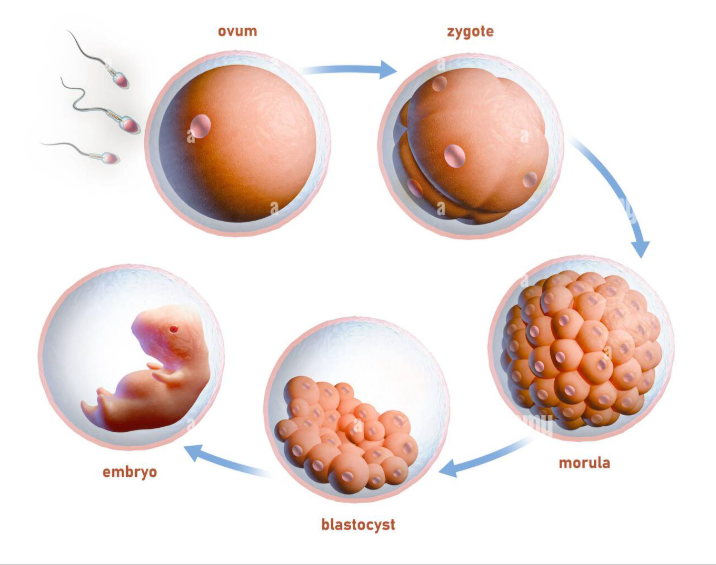
Fertilization Process
- Occurs in fallopian tube
- Forms zygote
- Zygote develops into embryo
Development of Embryo
After fertilization, the zygote divides repeatedly to form an embryo. The embryo gets embedded in the uterus and develops into a fetus.
- Zygote → embryo
- Embryo → fetus
Puberty
Puberty is the stage in life when the reproductive system becomes mature and capable of reproduction.
Changes in Boys
- Growth of beard and moustache
- Deep voice
- Sperm production begins
Changes in Girls
- Breast development
- Menstruation begins
- Body shape changes
Menstrual Cycle
The menstrual cycle is a monthly cycle in females in which the lining of the uterus thickens and sheds if fertilization does not occur.
- Cycle duration: ~28 days
- Menstruation occurs if no fertilization
Reproductive Health
- Maintain hygiene
- Balanced diet
- Avoid infections
Reproduction in Plants
Plants reproduce through both asexual and sexual methods. Sexual reproduction in plants involves formation of flowers, pollination, fertilization, and seed formation.
Structure of a Flower
A flower consists of different parts that help in reproduction.
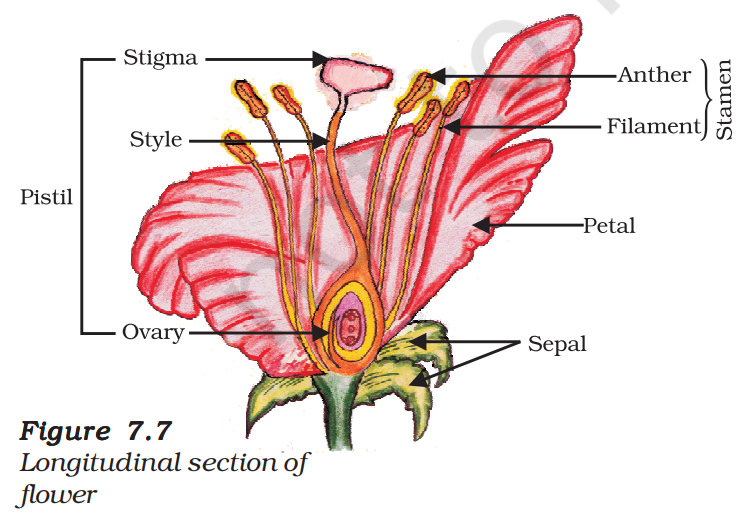
Structure of Flower
Main Parts
- Sepals: Protect flower
- Petals: Attract insects
- Stamen: Male part (produces pollen)
- Pistil: Female part (contains ovary)
Pollination
Pollination is the transfer of pollen grains from the anther to the stigma of a flower.
Types of Pollination
- Self Pollination: Same flower
- Cross Pollination: Different plants
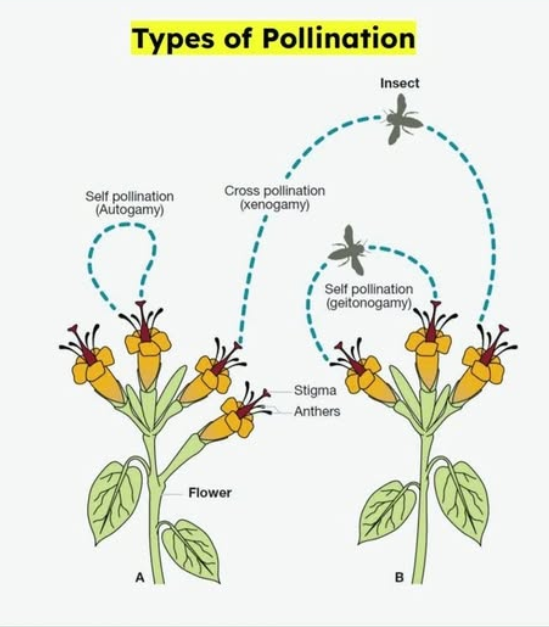
Pollination Types
Fertilization in Plants
After pollination, pollen grains travel to ovary and fuse with egg to form zygote.
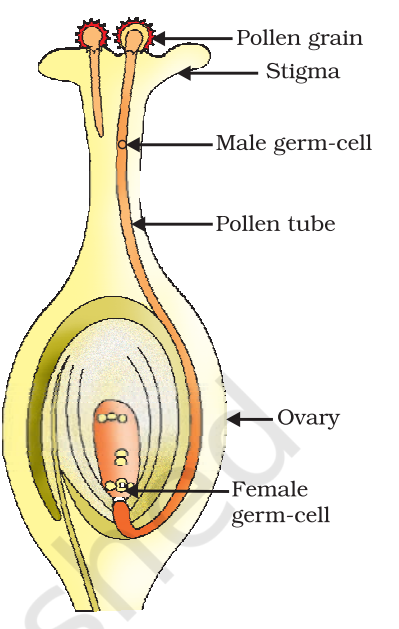
Fertilization in Plants
- Pollen tube formation
- Fusion of gametes
- Zygote formation
Seed and Fruit Formation
After fertilization, ovule develops into seed and ovary develops into fruit.
- Seed contains embryo
- Fruit protects seed
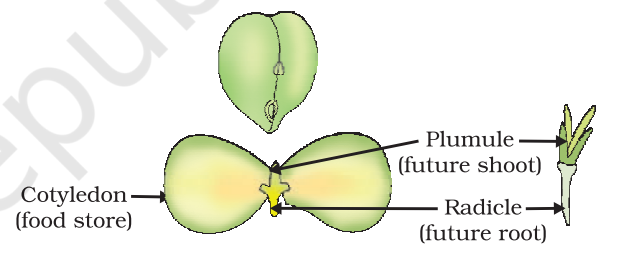
Seed Formation
Germination
Germination is the process by which a seed grows into a new plant under suitable conditions like water, air, and temperature.
- Requires water
- Needs oxygen
- Suitable temperature
NCERT Important Concepts
- Variation is created during sexual reproduction
- DNA copying is essential
- Reproduction ensures continuity of species
- Flower is reproductive organ of plant
DNA Copying and Variation
During reproduction, DNA copies are made. Small changes occur during copying, leading to variation. This variation is important for evolution and survival.
Case Based Questions
Case 1
A farmer observes that some plants grow faster than others due to cross pollination.
- What type of pollination is this?
- Why is it beneficial?
Case 2
A seed grows into a plant under suitable conditions.
- What is this process called?
- What are the conditions required?
Assertion Reason Questions
Q1: Assertion: Seeds are formed after fertilization. Reason: Ovule develops into seed.
Q2: Assertion: Cross pollination is better than self pollination. Reason: It produces variation.
Very Important Exam Points
- Flower = reproductive organ
- Pollination = transfer of pollen
- Fertilization = fusion of gametes
- Seed → embryo
- Fruit protects seed
Common Mistakes (Avoid)
- Do not confuse pollination and fertilization
- Write steps in correct order
- Label diagrams properly
Final Revision
- Asexual → no variation
- Sexual → variation
- Flower → reproduction
- Seed → new plant
About Chapter-- How do Organisms Reproduce
The chapter "How do Organisms Reproduce" is one of the most important topics in CBSE Class 10 Science. It explains how living organisms produce new individuals and ensure the continuation of their species. This chapter covers both asexual and sexual reproduction along with human reproductive systems and plant reproduction.
Reproduction is necessary for maintaining the existence of life on Earth. In asexual reproduction, only one parent is involved and offspring are identical, whereas in sexual reproduction, two parents are involved and variation is produced. This variation helps organisms survive in changing environmental conditions.
The human reproductive system is divided into male and female systems. The male system produces sperms while the female system produces eggs and supports embryo development. Fertilization leads to the formation of a zygote, which develops into an embryo and then into a fetus.
In plants, reproduction takes place through flowers. Pollination transfers pollen grains, and fertilization results in seed formation. Seeds grow into new plants through germination.
Understanding this chapter helps students score high marks in board exams because it includes diagrams, definitions, and important conceptual questions. Regular revision and practice of diagrams are essential for scoring good marks.
Topper Notes (Must Learn 🔥)
- Asexual reproduction → no variation
- Sexual reproduction → variation
- Fertilization forms zygote
- Flower is reproductive organ
- Pollination ≠ Fertilization
- Seed contains embryo
Extra Concept (High Level)
Internal vs External Fertilization
- Internal Fertilization: Inside body (Humans)
- External Fertilization: Outside body (Frogs)
Explore More Chapters
--- ---Final Power Revision 🚀
- Reproduction ensures survival
- Asexual → fast and identical
- Sexual → variation
- Flower → reproduction in plants
- Seed → new plant