Life Processes - Class 10 Notes
Life processes are the basic functions that are necessary for maintaining life in living organisms. These include nutrition, respiration, transportation, and excretion. Every organism, whether simple or complex, performs these processes to survive and function properly.
In CBSE Class 10 Science, the chapter “Life Processes” is one of the most important chapters because it forms the foundation of biology. Understanding this chapter helps students learn how living organisms function at a basic level. This includes how plants make food, how humans digest food, how oxygen is used to release energy, and how waste materials are removed from the body.
These notes are prepared according to NCERT textbooks and are designed to help students score high marks in board exams. The notes include detailed explanations, diagrams, definitions, and important points in a simple and easy-to-understand language.
Nutrition
Nutrition is the process by which organisms obtain food and utilize it for energy, growth, and repair. All living organisms require energy to carry out various life processes such as movement, reproduction, and maintaining body temperature.
- Provides energy
- Helps in growth and repair
- Maintains body functions
Modes of Nutrition
- Autotrophic Nutrition
- Heterotrophic Nutrition
Autotrophic Nutrition
Autotrophic nutrition is the mode of nutrition in which organisms prepare their own food using simple substances like carbon dioxide and water in the presence of sunlight and chlorophyll.
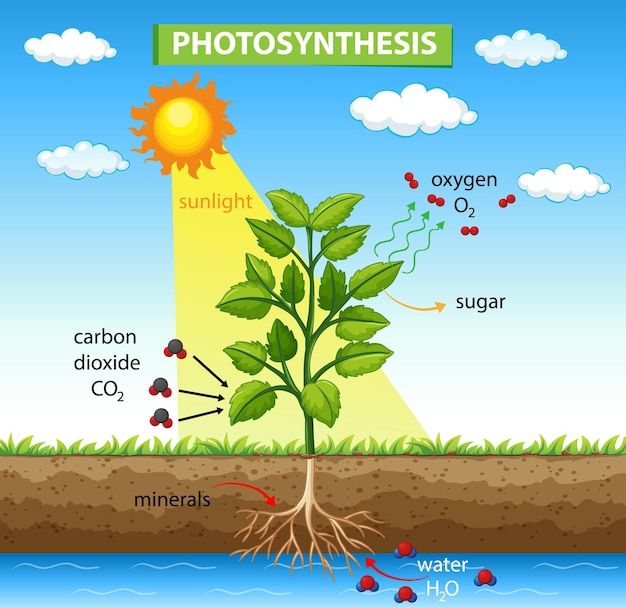
Photosynthesis Diagram
Photosynthesis
Photosynthesis is the process by which green plants prepare food using sunlight, carbon dioxide, and water.
- Occurs in leaves
- Requires chlorophyll
- Produces oxygen
Raw Materials
- Sunlight
- Chlorophyll
- Carbon dioxide
- Water
Stomata
Stomata are tiny pores present on the surface of leaves. They help in the exchange of gases and control water loss.
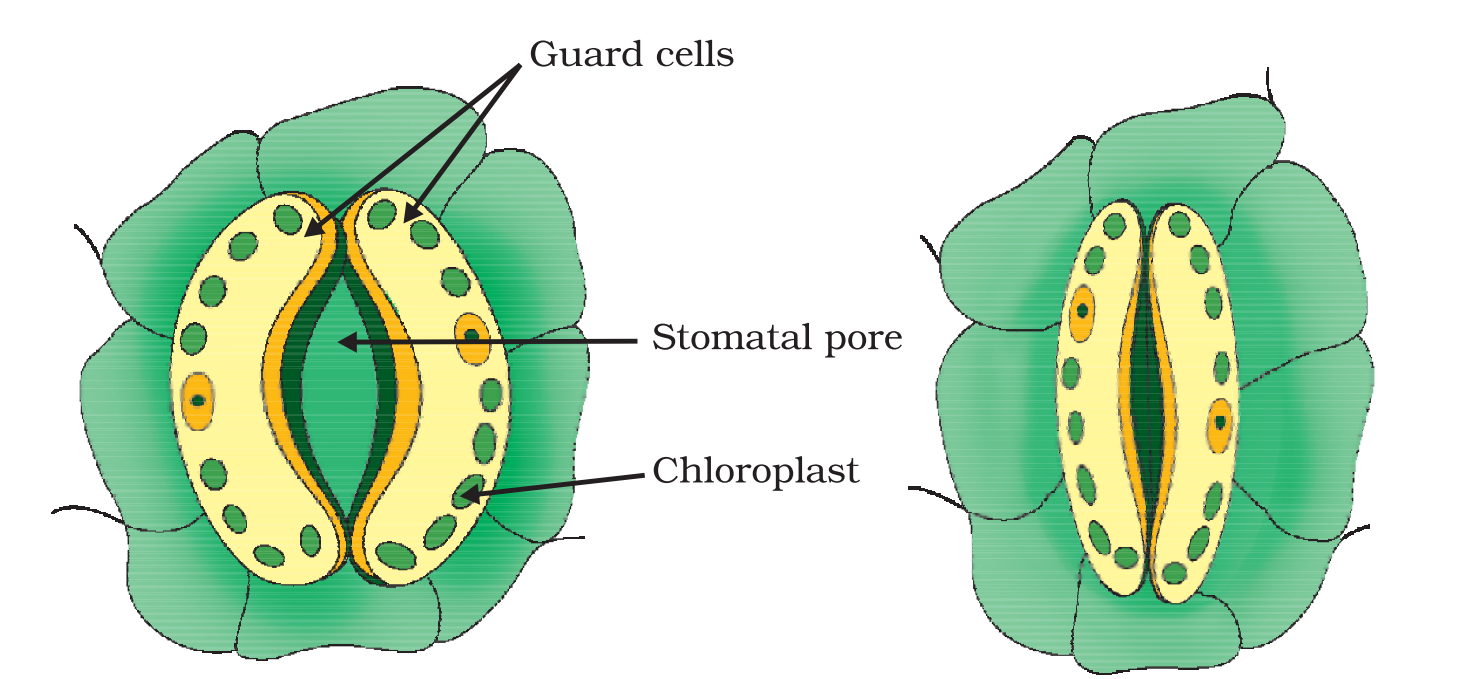
Stomata Diagram
Nutrition in Human Beings
Human beings have a complex digestive system that helps in breaking down food into simpler substances which can be absorbed and used by the body. This system consists of an alimentary canal and associated glands.
Human Digestive System
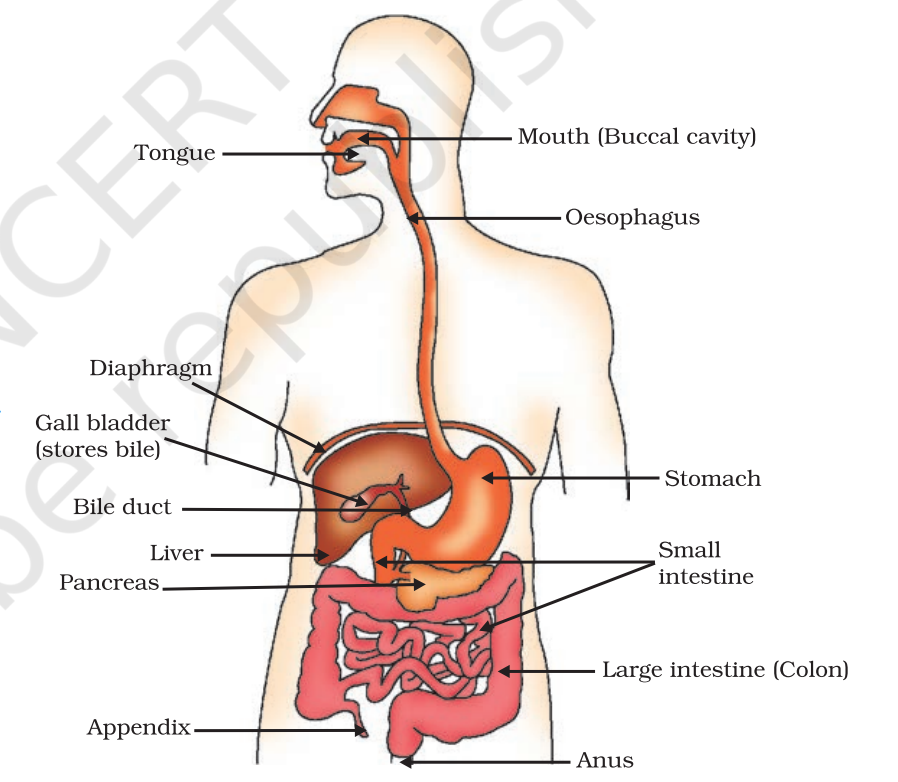
Human Digestive System Diagram
- Mouth
- Oesophagus
- Stomach
- Small intestine
- Large intestine
Mouth (Buccal Cavity)
- Food enters the body
- Teeth break food into smaller pieces
- Tongue mixes food with saliva
- Saliva contains enzyme amylase
Types of Teeth
- Incisors – cutting
- Canines – tearing
- Premolars – grinding
- Molars – fine grinding
Oesophagus
Food is transported from mouth to stomach by peristaltic movement.
Stomach
- Secretes HCl (kills bacteria)
- Pepsin digests proteins
- Mucus protects inner lining
Small Intestine
Most digestion and absorption occurs here.
- Bile breaks fats
- Pancreatic juice digests food
- Villi absorb nutrients
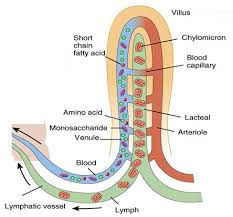
Villi Structure
Large Intestine
- Absorbs water
- Forms waste (feces)
- Waste expelled through anus
Nutrition in Amoeba
Amoeba is a unicellular organism that follows holozoic nutrition.
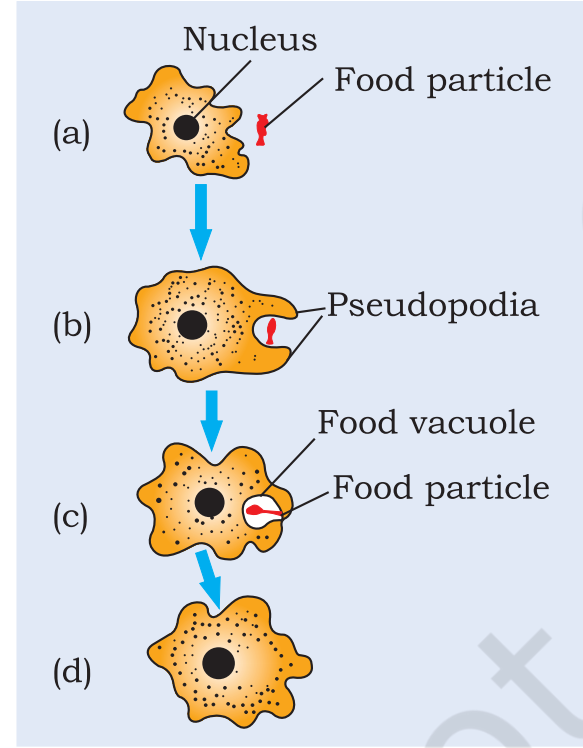
Amoeba Diagram
Steps of Nutrition in Amoeba
- Ingestion
- Digestion
- Absorption
- Assimilation
- Egestion
Amoeba uses pseudopodia to surround food and form a food vacuole where digestion takes place.
Respiration
Respiration is the process by which living organisms break down food to release energy. This energy is used to perform various life processes such as movement, growth, and repair.
Steps of Respiration
- 1. Breakdown of glucose: Glucose is broken into pyruvate in cytoplasm.
- 2. Further breakdown: Pyruvate is broken down in mitochondria.
Types of Respiration
1. Aerobic Respiration
- Occurs in presence of oxygen
- Produces large amount of energy
- End products: CO₂ and H₂O
2. Anaerobic Respiration
- Occurs in absence of oxygen
- Produces less energy
- In yeast → Alcohol + CO₂
- In muscles → Lactic acid
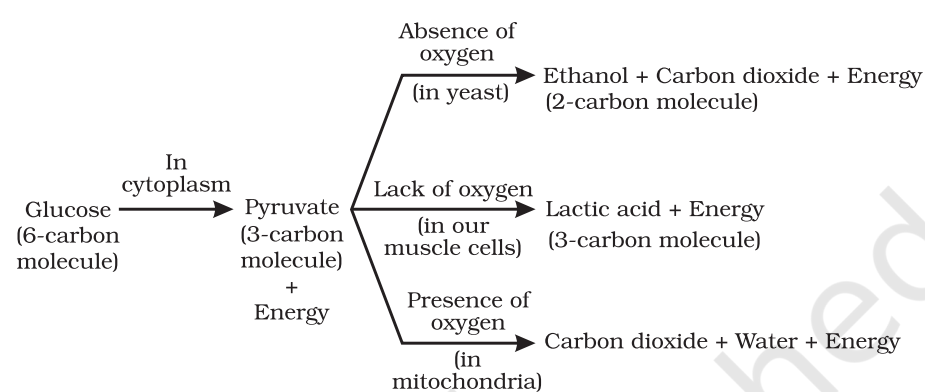
Respiration Process Diagram
Human Respiratory System
The human respiratory system helps in the exchange of gases. Oxygen is taken in and carbon dioxide is released out.
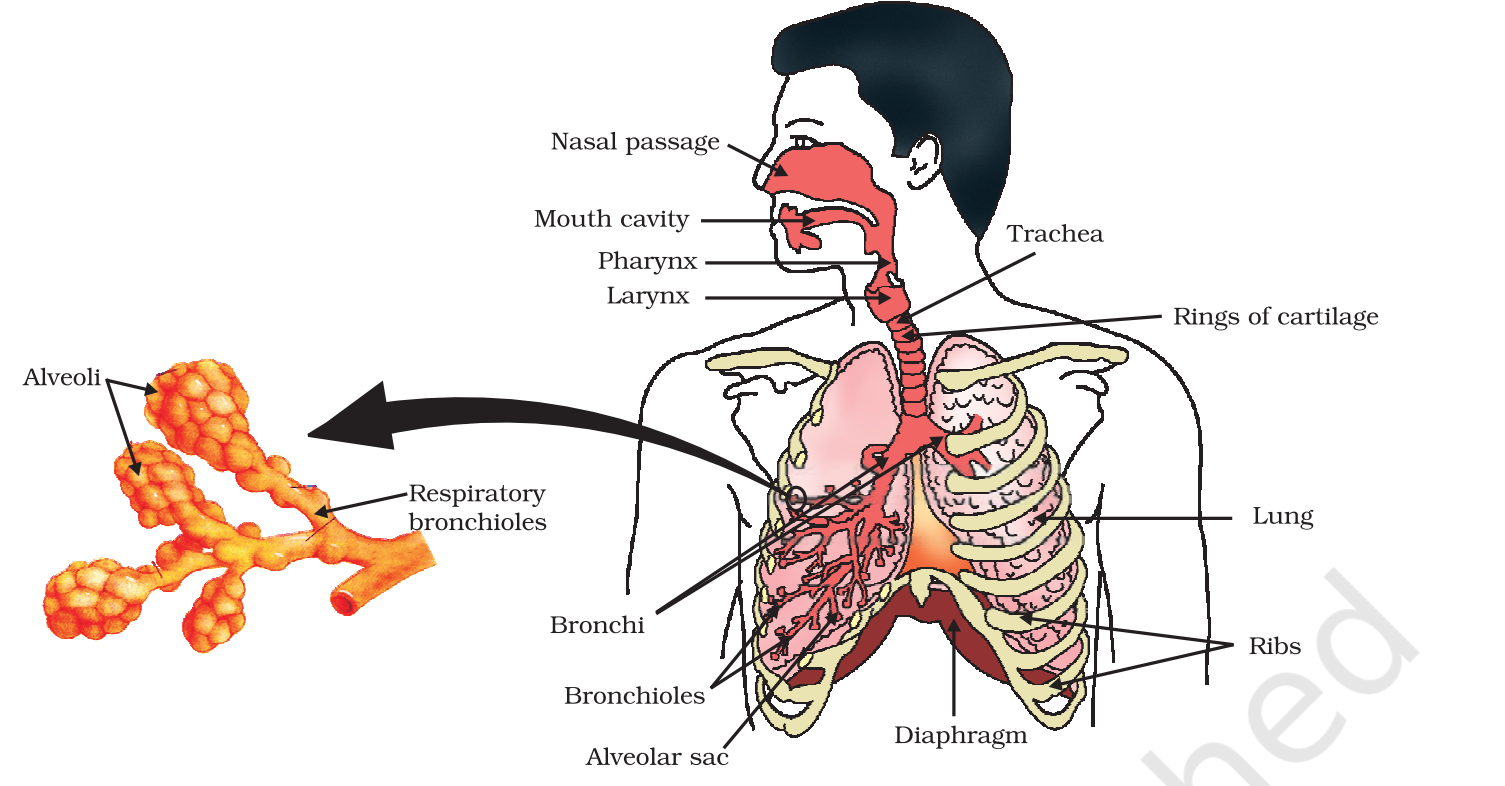
Human Respiratory System
Main Organs
- Nostrils
- Pharynx
- Larynx
- Trachea
- Bronchi
- Lungs
- Alveoli
Alveoli
- Tiny air sacs in lungs
- Site of gas exchange
- Surrounded by blood capillaries
Breathing Mechanism
- Diaphragm moves down → lungs expand → inhalation
- Diaphragm moves up → lungs contract → exhalation
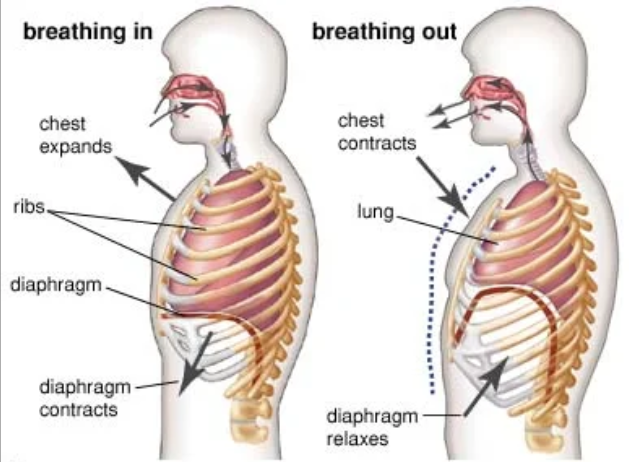
Breathing Process
Exchange of Gases
- Oxygen enters blood in alveoli
- Carbon dioxide leaves blood
- Occurs by diffusion
Pain During Running
During heavy exercise, oxygen supply is less, so anaerobic respiration occurs in muscles, producing lactic acid which causes pain.
Transportation in Living Organisms
Transportation is the process by which essential substances like food, oxygen, water, and waste materials are carried from one part of the body to another. In complex organisms, a special transport system is required for this purpose.
Transportation in Human Beings
In humans, the circulatory system is responsible for transportation. It consists of heart, blood, and blood vessels.
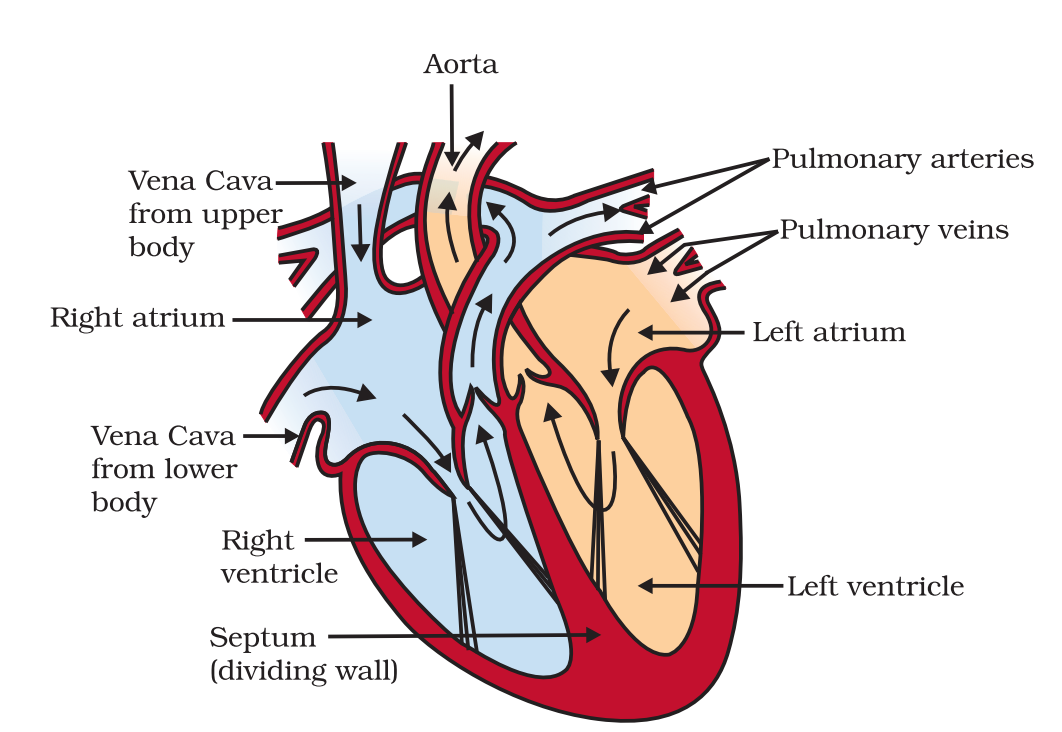
Human Heart Diagram
Components of Circulatory System
- Heart
- Blood
- Blood vessels
Heart
The heart is a muscular organ that pumps blood throughout the body. It works continuously to maintain blood circulation.
- Located in chest cavity
- Size of a fist
- Pumps blood continuously
Chambers of Heart
- Right Atrium
- Right Ventricle
- Left Atrium
- Left Ventricle
Working of Heart
- Deoxygenated blood enters right atrium
- Moves to right ventricle
- Sent to lungs for oxygenation
- Oxygenated blood returns to left atrium
- Moves to left ventricle
- Pumped to entire body
Double Circulation
In humans, blood passes through the heart twice during one complete cycle. This is called double circulation.
- Pulmonary circulation (heart → lungs → heart)
- Systemic circulation (heart → body → heart)
Blood
Blood is a fluid connective tissue that transports substances in the body.
- Plasma
- Red Blood Cells (RBC)
- White Blood Cells (WBC)
- Platelets
Functions of Blood
- Transport oxygen and nutrients
- Remove waste
- Protect body from infection
Blood Cells
- RBC: Carry oxygen using haemoglobin
- WBC: Fight infection
- Platelets: Help in blood clotting
Blood Vessels
- Arteries: Carry oxygenated blood away from heart
- Veins: Carry deoxygenated blood to heart
- Capillaries: Exchange substances
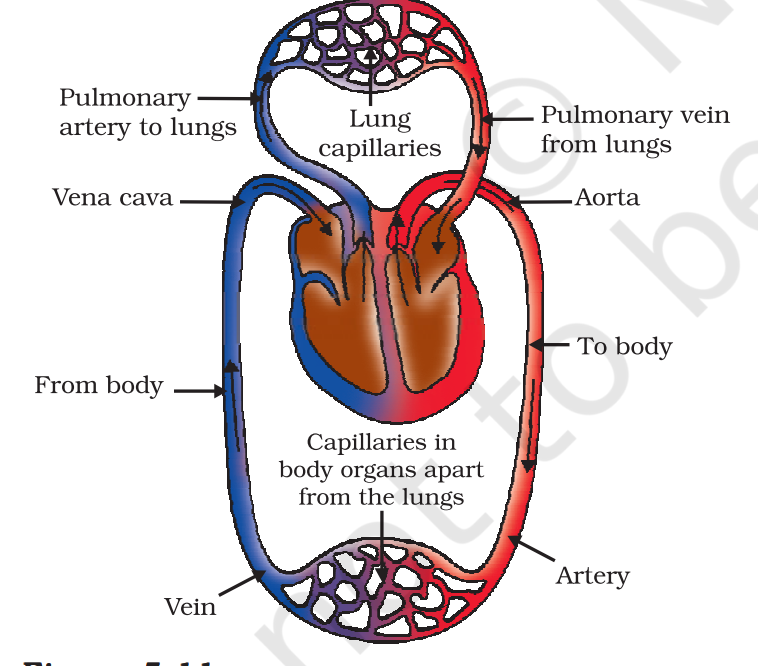
Blood Vessels Diagram
Lymph
- Fluid similar to blood but without RBC
- Helps in immunity
- Transports fats
Transportation in Plants
Plants have specialized tissues for transportation called vascular tissues.
Types of Vascular Tissue
- Xylem
- Phloem
Xylem
- Transports water and minerals
- Movement is upward (roots → leaves)
Phloem
- Transports food
- Movement in both directions
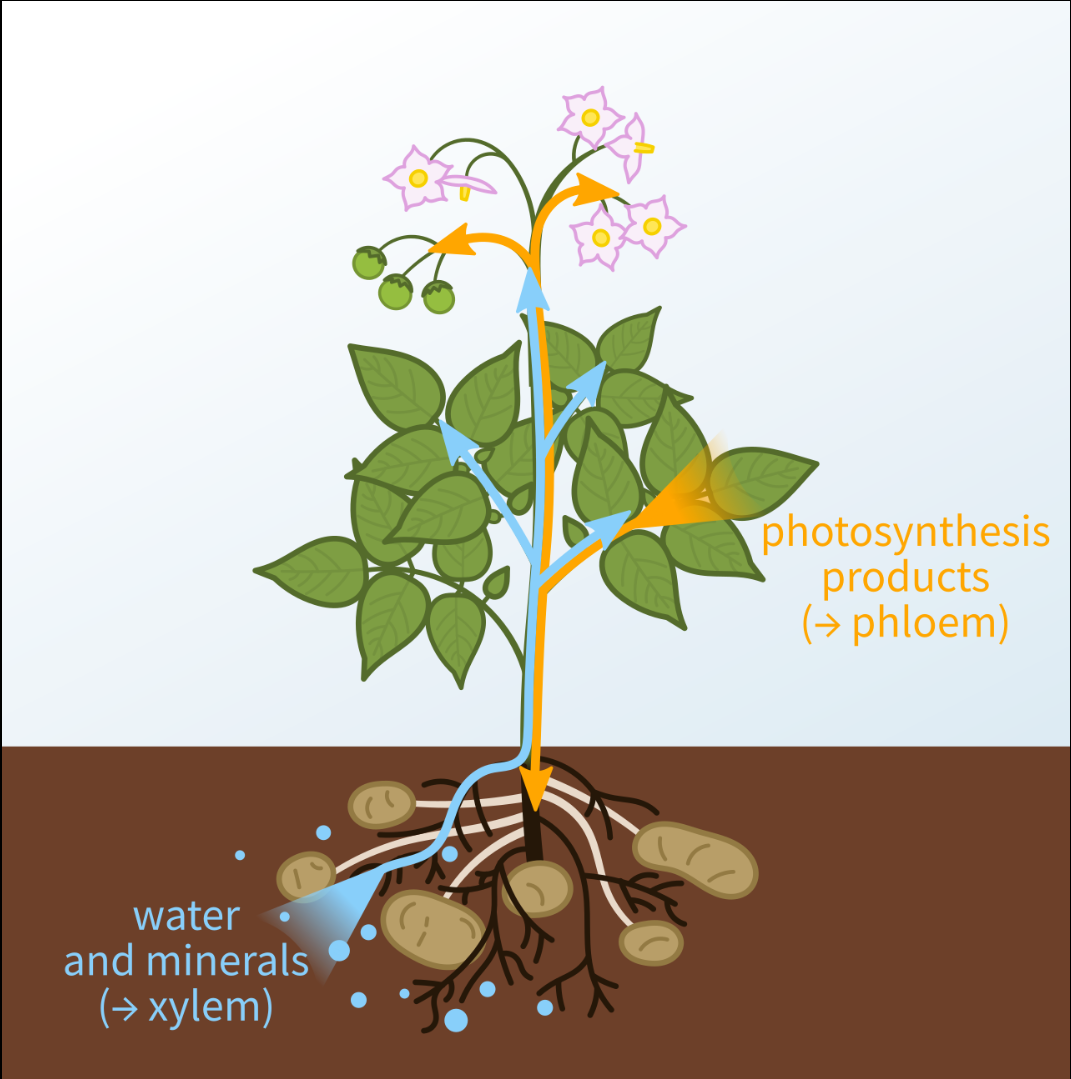
Xylem and Phloem
Transpiration
Loss of water vapour from leaves is called transpiration.
- Helps in cooling
- Creates suction force
- Helps in water transport
Ascent of Sap
- Movement of water from roots to leaves
- Due to root pressure + transpiration pull
Excretion
Excretion is the process of removing waste materials produced in the body during metabolic activities. If these wastes are not removed, they can become toxic and harmful to the body.
Excretion in Human Beings
In humans, the excretory system is responsible for removing waste products like urea, excess salts, and water.
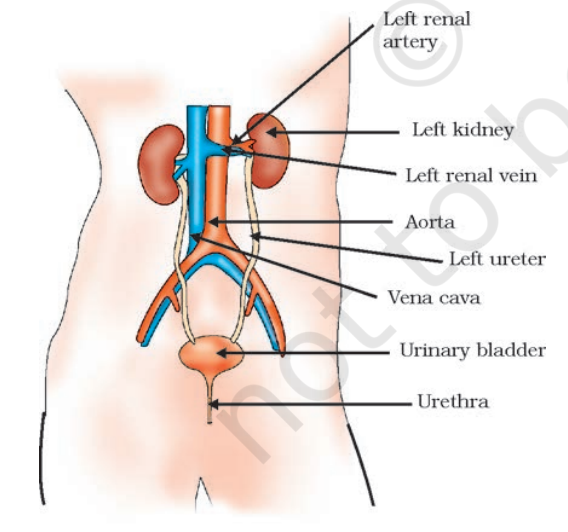
Human Excretory System
Parts of Excretory System
- Kidneys
- Ureters
- Urinary bladder
- Urethra
Kidney
Kidneys are bean-shaped organs that filter blood and remove nitrogenous waste.
- Located near backbone
- Filter blood continuously
- Produce urine
Nephron
Nephron is the structural and functional unit of kidney.
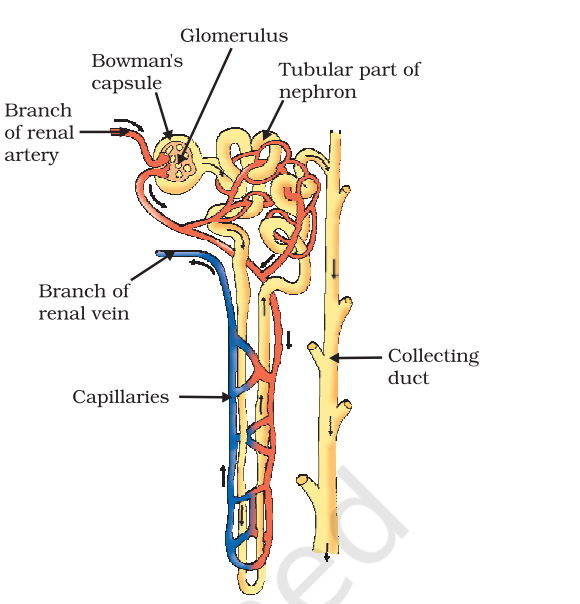
Nephron Diagram
Structure
- Glomerulus
- Bowman's capsule
- Tubule
- Collecting duct
Urine Formation
- 1. Filtration: Blood is filtered in glomerulus
- 2. Reabsorption: Useful substances reabsorbed
- 3. Secretion: Extra waste added to filtrate
Haemodialysis
If kidneys fail, an artificial kidney machine is used to filter blood. This process is called dialysis.
Excretion in Plants
Plants do not have a specialized excretory system. They remove waste through different methods.
- Gases released through stomata
- Waste stored in leaves, bark
- Removed by shedding leaves
Final Quick Revision
Important Definitions
- Nutrition: Taking and using food
- Respiration: Releasing energy from food
- Transportation: Movement of substances
- Excretion: Removal of waste
Important Points
- Photosynthesis occurs in chloroplast
- Respiration occurs in mitochondria
- Heart pumps blood
- Kidney filters blood