Introduction to Control and Coordination
Control and coordination is a fundamental life process that helps living organisms to respond to various stimuli present in their surroundings. Every organism, whether unicellular or multicellular, needs to maintain a balance between different body activities. This balance is achieved through proper coordination between organs and systems.
In multicellular organisms like humans, different organs perform specific functions. Therefore, it becomes essential that these organs work together in a well-organized manner. This is achieved through control and coordination systems like the nervous system and endocrine system.
- Helps in responding to environment
- Maintains internal balance
- Essential for survival
Stimulus and Response
A stimulus is any change in the environment that can be detected by an organism. The reaction of an organism to a stimulus is called a response.
Examples
- Touching a hot object → hand withdrawn
- Light falling on eye → pupil constricts
- Smell of food → salivation
Nervous System (Detailed)
The nervous system is responsible for quick communication in the body. It uses electrical impulses to send signals from one part of the body to another.
Functions
- Receives information from environment
- Processes information
- Sends commands to muscles and glands
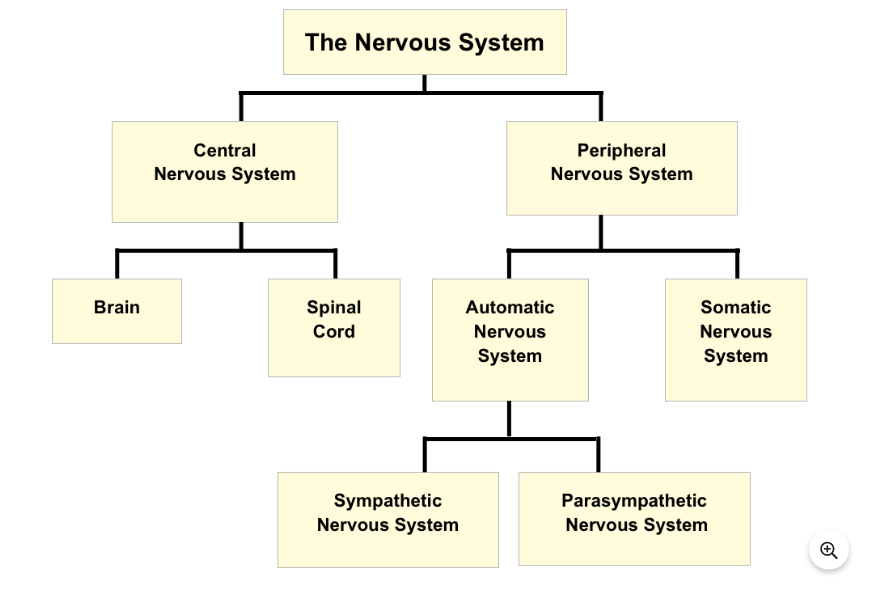
Human Nervous System
Types of Nervous System
1. Central Nervous System (CNS)
- Consists of brain and spinal cord
- Main control center
- Processes information
2. Peripheral Nervous System (PNS)
- Network of nerves
- Connects CNS to body parts
Neuron (Detailed Study)
Neuron is the basic structural and functional unit of the nervous system. It is a specialized cell designed to transmit information in the form of electrical impulses.
Structure of Neuron
- Dendrites: Receive signals
- Cell Body: Contains nucleus
- Axon: Carries impulses
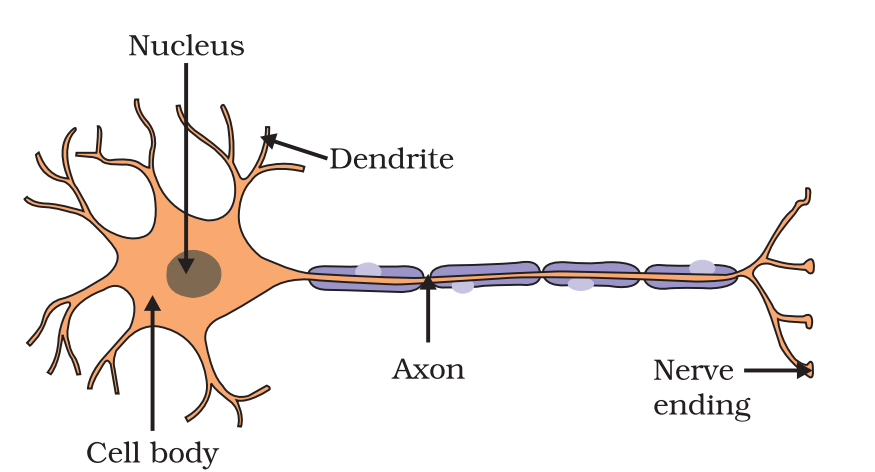
Structure of Neuron
Working of Neuron
- Signal received by dendrites
- Processed in cell body
- Transmitted through axon
Nerve Impulse
A nerve impulse is an electrical signal that travels through a neuron. It is generated due to movement of ions across the neuron membrane.
- Very fast transmission
- Occurs in milliseconds
- Based on electrochemical changes
Synapse
Synapse is the junction between two neurons. It helps in transmitting signals from one neuron to another.
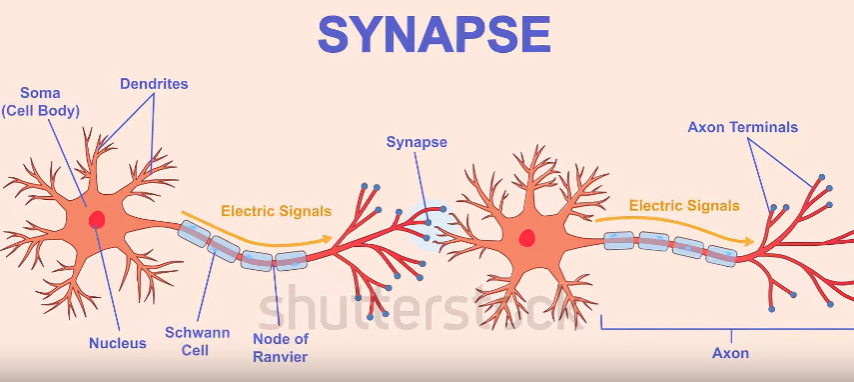
Synapse Diagram
Working
- Electrical signal reaches end of neuron
- Converted into chemical signal
- Neurotransmitter released
- Next neuron activated
Reflex Action (Deep)
Reflex action is an automatic and immediate response to a stimulus. It does not involve thinking and is controlled by the spinal cord.
Importance
- Protects body from injury
- Saves time
- Fast response
Examples
- Removing hand from fire
- Blinking of eyes
Reflex Arc
- Receptor
- Sensory neuron
- Spinal cord
- Motor neuron
- Effector
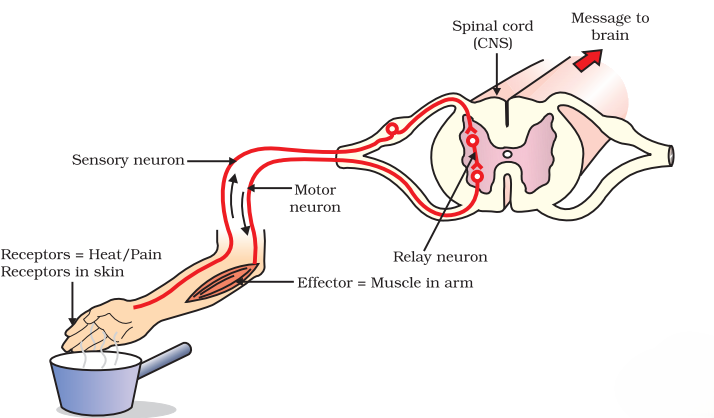
Reflex Arc
Human Brain (Deep Study)
The brain is the most important organ of the nervous system. It controls all activities of the body.
Main Functions
- Thinking and intelligence
- Memory storage
- Control of voluntary actions
- Control of involuntary actions
Parts of Brain
Forebrain
- Largest part
- Controls thinking, memory
- Voluntary actions
Midbrain
- Controls reflex actions of eyes and ears
Hindbrain
- Balance and posture
- Breathing and heartbeat
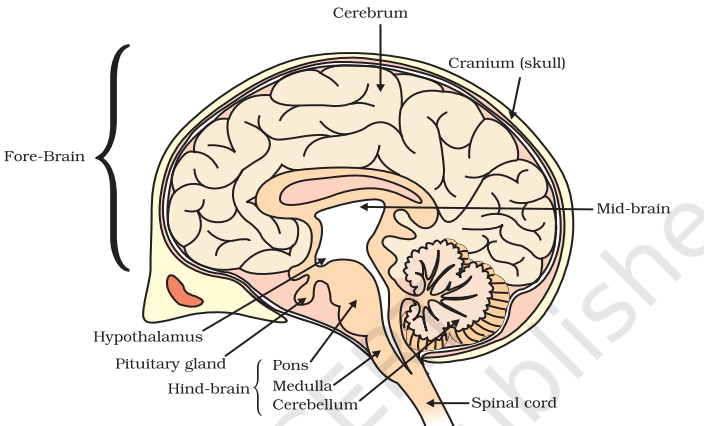
Human Brain
Endocrine System (Detailed Study)
The endocrine system is a system of glands that release chemical substances called hormones directly into the bloodstream. These hormones regulate various body functions such as growth, metabolism, reproduction, and response to stress.
Unlike the nervous system, the endocrine system works slowly but its effects are long-lasting. Hormones act on specific target organs and help maintain balance in the body.
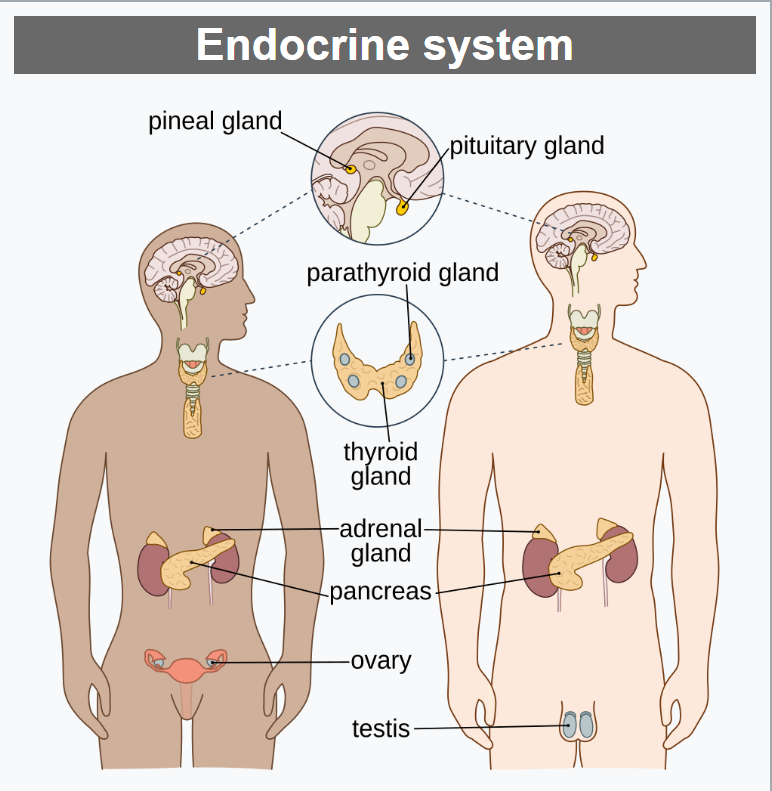
Endocrine System
Characteristics of Hormonal Control
- Works through chemical messengers (hormones)
- Transported by blood
- Slow response
- Long-lasting effect
- Target specific organs
Major Endocrine Glands
Pituitary Gland
- Called master gland
- Controls other glands
- Secretes growth hormone
Thyroid Gland
- Produces thyroxine
- Controls metabolism
- Requires iodine
Pancreas
- Produces insulin
- Controls blood sugar level
Adrenal Gland
- Produces adrenaline
- Emergency hormone
- Increases heart rate and breathing
Reproductive Glands
- Testes → male hormones
- Ovaries → female hormones
Hormones (Detailed)
Hormones are chemical substances that act as messengers in the body. They are secreted in small amounts but have significant effects on body functions.
Functions of Hormones
- Control growth and development
- Regulate metabolism
- Control reproductive processes
- Maintain internal balance
Feedback Mechanism
The body maintains hormone levels through feedback mechanisms. If hormone level increases, the gland reduces secretion, and if it decreases, the gland increases secretion.
Feedback Mechanism
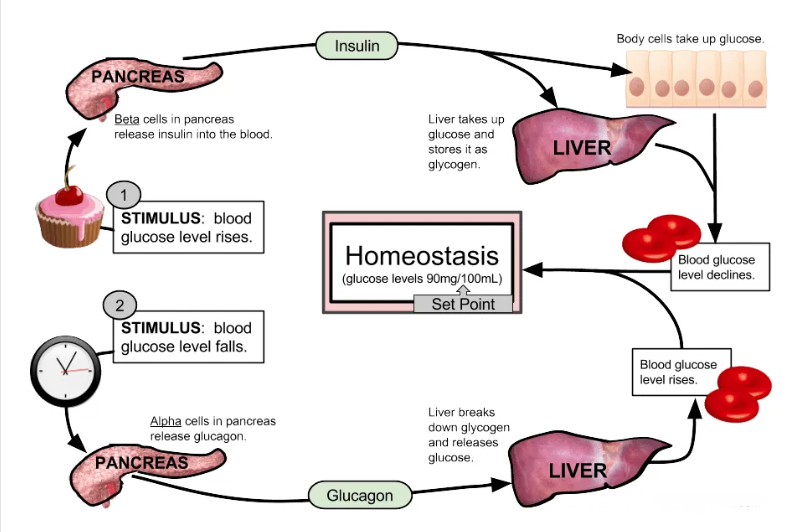
Coordination in Plants
Plants do not have a nervous system, but they show control and coordination through chemical substances called plant hormones.
- Respond to light, gravity, water
- Movement is slow
- Controlled by hormones
Plant Movements
Tropic Movements (Directional)
- Phototropism: Response to light
- Geotropism: Response to gravity
- Hydrotropism: Response to water
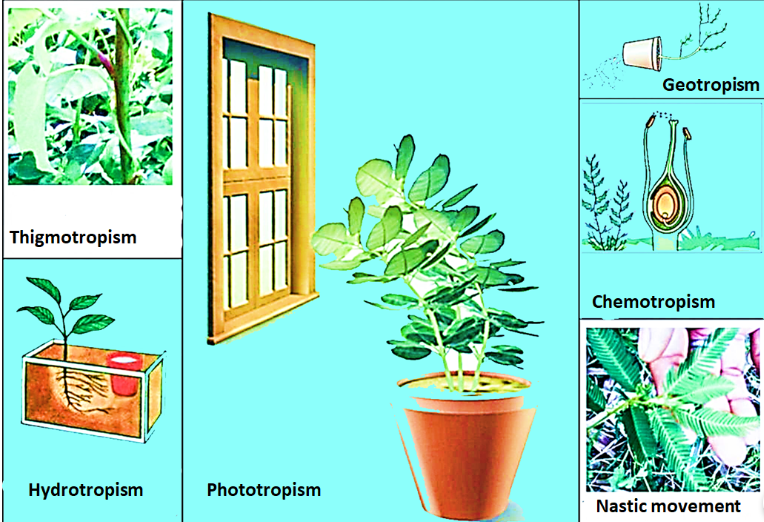
Plant Movements
Nastic Movements (Non-directional)
- Independent of direction
- Example: Touch-me-not plant closes leaves
Plant Hormones
Auxin
- Promotes growth
- Helps in phototropism
Gibberellin
- Increases stem growth
Cytokinin
- Promotes cell division
Abscisic Acid
- Inhibits growth
- Causes leaf fall
Ethylene
- Helps in fruit ripening
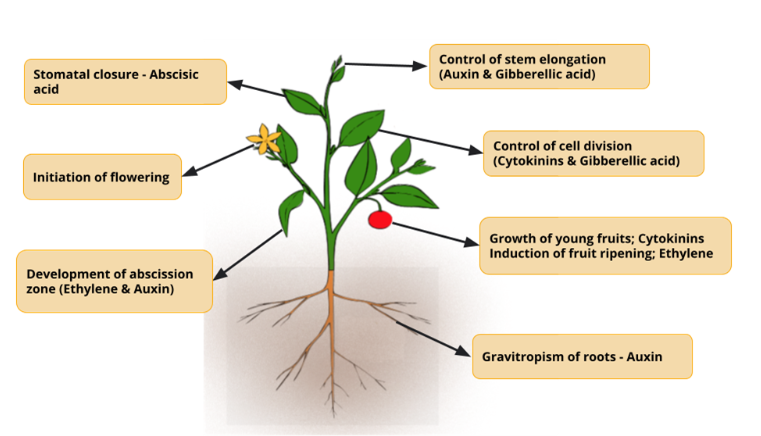
Plant Hormones
Comparison: Nervous vs Endocrine System
| Feature | Nervous System | Endocrine System |
|---|---|---|
| Type of signal | Electrical | Chemical |
| Speed | Fast | Slow |
| Effect | Short | Long-lasting |
| Control | Immediate | Delayed |
Important NCERT Points
- Nervous system gives quick response
- Hormones control long-term changes
- Plants do not have nerves
- Hormones regulate growth
Common Diseases (Important)
- Goitre → lack of iodine
- Diabetes → lack of insulin
- Dwarfism → lack of growth hormone
Final Quick Revision
- Endocrine system works slowly
- Hormones travel through blood
- Plants use hormones only
- Auxin controls growth
NCERT Line-by-Line Important Concepts
In multicellular organisms, different organs are specialized to perform specific functions. Therefore, it is essential that these organs work together in a coordinated manner. Control and coordination systems ensure proper timing and functioning of all organs.
Receptors and Effectors
Receptors are specialized cells that detect stimuli. They are present in sense organs like eyes, ears, skin, etc. Effectors are muscles or glands that perform the response action.
- Receptors → detect changes
- Effectors → produce response
Electrical Nature of Nerve Impulse
The nerve impulse is electrical in nature. It is generated due to the movement of ions across the neuron membrane. When a neuron is stimulated, it changes its electrical state, which allows the impulse to travel along the axon.
- Fast transmission
- Occurs in milliseconds
- One-directional flow
Coordination through Chemical Signals
In addition to electrical signals, coordination in the body also occurs through chemical signals called hormones. These hormones are secreted by endocrine glands and transported through blood to target organs.
---Difference Between Reflex Action and Voluntary Action
| Reflex Action | Voluntary Action |
|---|---|
| Automatic response | Controlled by brain |
| No thinking involved | Thinking required |
| Very fast | Relatively slower |
| Controlled by spinal cord | Controlled by brain |
Detailed Definitions (50 Words Each)
Control and Coordination
Control and coordination is the process by which different organs of the body work together in a systematic manner to respond to internal and external changes. It ensures proper functioning of the body by regulating activities through nervous and endocrine systems.
Neuron
Neuron is a specialized cell that forms the basic unit of the nervous system. It is responsible for transmitting nerve impulses throughout the body. It consists of dendrites, a cell body, and an axon, which together help in receiving and sending signals.
Reflex Action
Reflex action is an immediate and automatic response to a stimulus without involving conscious thought. It is controlled by the spinal cord and helps in protecting the body from harmful situations by providing a rapid response.
Hormone
Hormones are chemical messengers produced by endocrine glands and released into the bloodstream. They regulate various body processes such as growth, metabolism, and reproduction. Hormones act slowly but have long-lasting effects on target organs.
---Case Based Questions
Case 1
A person accidentally touches a hot iron rod and quickly withdraws his hand without thinking.
- Which type of action is this?
- Which part of nervous system controls it?
Case 2
A person feels scared and his heartbeat increases suddenly.
- Which hormone is responsible?
- Which gland secretes it?
Assertion Reason Questions
Q1: Assertion: Reflex actions are very fast. Reason: They are controlled by spinal cord.
Q2: Assertion: Hormones act slowly. Reason: They travel through blood.
Important Diagrams Explanation
Neuron Diagram
- Dendrite receives signal
- Axon carries impulse
- Synapse transmits signal
Reflex Arc Diagram
- Stimulus detected by receptor
- Signal goes to spinal cord
- Response generated quickly
Brain Diagram
- Forebrain → thinking
- Midbrain → reflex
- Hindbrain → balance
Very Important Exam Points
- Neuron is basic unit of nervous system
- Reflex action saves time
- Hormones are chemical messengers
- Plants use hormones for coordination
- Brain controls voluntary actions
Common Mistakes (Avoid in Exam)
- Do not confuse nervous and endocrine system
- Write full reflex arc steps
- Use correct terminology
- Do not skip diagrams
Final Ultra Revision
- Control + Coordination = Body regulation
- Nervous system → fast response
- Endocrine system → slow response
- Plants → only chemical control
About Control and Coordination Chapter
Control and Coordination is one of the most important chapters in CBSE Class 10 Science. It explains how living organisms respond to various stimuli and maintain proper functioning of their body. This chapter is essential for understanding the basic working of the human body as well as plant systems.
In this chapter, students learn about the nervous system, which provides rapid communication through electrical impulses, and the endocrine system, which uses hormones for slow but long-lasting effects. Both systems work together to ensure that different organs of the body function in a coordinated manner.
The nervous system includes the brain, spinal cord, and neurons. The brain acts as the control center and processes information received from sense organs. The spinal cord controls reflex actions, which are quick responses that protect the body from harm.
The endocrine system includes glands like pituitary, thyroid, pancreas, and adrenal glands. These glands secrete hormones that regulate growth, metabolism, and reproduction. Hormonal coordination is slower but plays a crucial role in long-term body processes.
Plants also show control and coordination through chemical signals. They respond to light, gravity, and other environmental factors using plant hormones like auxin, gibberellin, and ethylene. These responses help plants grow and survive in changing conditions.
Understanding this chapter helps students score high marks in board exams because it includes important diagrams, definitions, and conceptual questions. Proper revision of this chapter ensures clarity in biological processes and improves overall understanding of life sciences.
Topper Notes (Must Learn 🔥)
- Nervous system works through electrical impulses
- Endocrine system works through hormones
- Reflex action is controlled by spinal cord
- Brain controls voluntary actions
- Auxin controls plant growth
- Adrenaline is emergency hormone
Extra Concept (High Level)
Fight or Flight Response
When a person faces danger or fear, the adrenal gland releases adrenaline hormone. This increases heart rate, breathing rate, and blood flow to muscles, preparing the body to either fight the situation or run away from it.
- Heart beats faster
- Breathing increases
- More energy produced
Explore More Chapters
--- ---Final Power Revision 🚀
- Neuron = basic unit
- Brain = control center
- Reflex = fast response
- Hormones = chemical messengers
- Plants = chemical coordination only